Deepaavali | Diwali

 Deepaavali(Diwali)


Diwali is one of the biggest festival of Hindus, celebrated with great enthusiasm and happiness in India. The festival is celebrated for five continuous days, where the third days is celebrated as the main Diwali festival or 'Festival of lights'. Different colorful varieties of fireworks are always associated with this festival. On this auspicious day, people light up diyas and candles all around their house. They perform Laxmi Puja in the evening and seek divine blessings of Goddess of Wealth. The festival od Diwali is never complete without exchange of gifts. People present diwali gifts to all near and dear ones.


Diwali Festival In India 

"Diwali", the festival of lights, illuminates the darkness of the New Year's moon, and strengthens our close friendships and knowledge, with a self-realization! 
Diwali is celebrated on a nation-wide scale on Amavasya - the 15th day of the dark fortnight of the Hindu month of Ashwin, (October/November) every year. It symbolizes that age-old culture of India which teaches to vanquish ignorance that subdues humanity and to drive away darkness that engulfs the light of knowledge. Diwali, the festival of lights even to-day in this modern world projects the rich and glorious past of India.

Every year on the dark nights of Diwali the sound of firecrackers announces the celebration of the favorite festival of Indians. Homes are decorated, sweets are distributed by everyone and thousands of lamps are lit to create a world of fantasy. Of all the festivals celebrated in India, Diwali is by far the most glamorous and important. Enthusiastically enjoyed by people of every religion, its magical and radiant touch creates an atmosphere of joy and festivity. 

The ancient story of how Diwali evolved into such a widely celebrated festival is different in various regions and states of India. In the north, particularly in Uttar Pradesh, Punjab, Haryana, Bihar and the surrounding areas, Diwali is the day when King Rama's coronation was celebrated in Ayodhya after his epic war with Ravana, the demon king of Lanka. By order of the royal families of Ayodhya and Mithila, the kingdom of which Sita was princess, the cities and far-flung boundaries of these kingdoms were lit up with rows of lamps, glittering on dark nights to welcome home the divine king Rama and his queen Sita after 14 years of exile, ending with an across-the-seas war in which the whole of the kingdom of Lanka was destroyed. 

On the day of Diwali festival, doorways are hung with torans of mango leaves and marigolds. Rangolis are drawn with different colored powders to welcome guests. The traditional motifs are often linked with auspicious symbols of good luck. Oil diyas are arranged in and around the house. Because of these flickering lamps, the festival has acquired its name : Dipawali or Diwali meaning 'a rows of lamps'. On this day, people buy something for the house or some jewelry for the women of the house. It is auspicious to be buy something metallic, such as silver. 
Whatever may be the fables and legends behind the celebrations of Diwali, all people exchange sweets, wear new clothes and buy jewelry at this festive time. Card parties are held in many homes. Diwali has become commercialized as the biggest annual consumer spree because every family shops for sweets, gifts and fireworks. However, in all this frenzy of shopping and eating, the steady, burning lamp is a constant symbol of an illuminated mind.


Note:Subject taken from Various Sites.

Ayudha Puja


Ayudha Puja
Ayudha Puja is an integral part of the Navratri festival (festival of triumph), a Hindu festival which is traditionally celebrated in India. It is also called "Astra Puja", the synonym for Ayudha Puja. In simple terms, it means “Worship of Implements”. It is celebrated in Karnataka (in erstwhile Mysore State) as “Ayudha Puje” , in Kerala as Ayudha Puja, and in Tamil Nadu as Ayuda Pujai . The festival falls on the ninth day or Navami of the bright half of Moon's cycle of 15 days (as per Almanac) in the month of September/October, and is popularly a part of the Dasara or Navaratri or Durga Puja or Golu festival. On the ninth day of the Dasara festival, weapons and tools are worshipped. In Karnataka, the celebration is for killing of the demon king Mahishasura by goddess Chamundeshwari. After slaying of the demon king, the weapons were kept out for worship. While Navaratri festival is observed all over the country but in South Indian states, where it is widely celebrated as Ayudha Puja, there are slight variations of worship procedure.

The principal Shakti goddesses worshipped during the Ayudha puja are Saraswati (the Goddess of wisdom, arts and literature), Lakshmi (the goddess of wealth) and Parvati (the divine mother), apart from various types of equipment; it is on this occasion when weapons are worshipped by soldiers and tools are revered by artisans. The Puja is considered a meaningful custom, which focuses specific attention to one’s profession and its related tools and connotes that a divine force is working behind it to perform well and for getting the proper reward.

In the cross cultural development that has revolutionized the society, with modern science making a lasting impact on the scientific knowledge and industrial base in India, the ethos of the old religious order is retained by worship of computers and typewriters also during the Ayudha Puja, in the same manner as practised in the past for weapons of warfare.

Mode of worship
The tools and all implements of vocation are first cleaned. All the tools, machines, vehicles and other devices are then painted or well polished after which they are smeared with turmeric paste, sandalwood paste (in the form of a tilak (insignia or mark) and Kumkum (vermillion). Then, in the evening, previous to the puja day, they are placed on an earmarked platform and decorated with flowers. In the case of weapons of war, they are also cleaned, bedecked with flowers and tilak and placed in a line, adjacent to a wall. On the morning of the puja that is on the navami day, they are all worshipped along with the images of Saraswati, Lakshmi and Parvati. Books and musical instruments are also placed on the pedestal for worship. On the day of the puja, these are not to be disturbed. The day is spent in worship and contemplation


The importance of Ayudha Puja

The importance of Ayudha Puja on this occasion may also be due to the fact that on the Vijayadashami day, Arjuna took back his weapons which he had hidden in a Bani tree in order to lead a life in disguise for the promised period of exile. It is believed that one who begins or renovates his learning to work on the tenth day-Vijayadashami will secure a grand success as Partha did in Kurukshetra warfare.
Be it the plough, be it a vegetable cutter or be it Soorya Kiran Air Craft, the Ayudha Puja is a worship of whatever implements one may use in day-to-day life. On the preceding evening, it is traditional to place these implements on an altar to the Divine. If one can make a conscious effort to see the divine in the tools and objects one uses each day, it will help one to see one's work as an offering to God.
In India it is customary for one to prostrate before the tools one will use before starting one's work each day; this is an expression of gratitude to God for granting us the tools to fulfill our duties.
Although the nine day festival is observed in homes, offices, workshops and temples, the Ayudha pooja is a widely visible festival as it is manifested on the streets and corridors of buildings. All types of Vehicles including the bicycles will be out in the streets after grand water wash and decorated with flowers and frills. Its a treat to watch drivers going for a jolly ride on their trucks, cars, vans, coaches playing their favorite music, a bit loudly!


Bakrid


Bakrid(Eid al-Adha) 
Eid al-Adha ( "feast of sacrifice") or "Festival of Sacrifice" or "Greater Eid" is an important religious holiday celebrated by Muslims worldwide to commemorate the willingness of Abraham (Ibrahim) to sacrifice his son Ishmael (Isma'il) as an act of obedience to God, before God intervened to provide him with a sheep— to sacrifice instead.
Eid al-Adha is the latter of two Eid festivals celebrated by Muslims, whose basis comes from Sura 2 (Al-Baqara) Ayah 196 in the Qur'an. Like Eid ul-Fitr, Eid al-Adha begins with a Sunnah prayer of two Raka'ah (units) followed by a sermon (khuṭbah).
The word "Eid" appears in Sura al-Mai'da ("The Table Spread," Chapter 5) of the Qur'an, meaning 'solemn festival'.
Eid al-Adha is celebrated annually on the 10th day of the 12th and the last Islamic month of Dhu al-Hijjah (ذو الحجة) of the lunar Islamic calendar. Eid al-Adha celebrations start after the Hajj, the annual pilgrimage to Mecca in Saudi Arabia by Muslims worldwide, descend from Mount Arafat. The date is approximately 70 days (2 Months & 10 days) after the end of the month of Ramadan, i.e. Eid-ul-Fitr. Ritual observance of the holiday lasts until sunset of the 13th day of Dhu al-Hijjah.

The Sunnah of Eid al-Adha
In keeping with the tradition of the Prophet Muhammad, Muslims are encouraged to prepare themselves for the occasion of Eid. Below is a list of things Muslims are recommended to do in preparation for the Eid al-Adha festival:
Make wudu (ablution) and offer Salat al-Fajr (the pre-sunrise prayer).
Prepare for personal cleanliness – take care of details of clothing, etc.
Dress up, putting on new or best clothes available.


Salat al-Eid (Eid prayer)
Muslims from the Ottoman Empire gather after Eid prayers to greet the Imam.
The scholars differed concerning the ruling on Eid prayers. There are three scholarly points of view:
1 – That Eid prayer is Sunnah mu’akkadah (recommended). This is the view of Imam Maalik and Imam al-Shaafa’i.
2 – That it is a Fard Kifaya (communal obligation). This is the view of Imam Ahmad.
3 – That it is Wajib on all Muslim men (a duty for each Muslim and is obligatory for men); those who do not do it with no excuse are sinning thereby. This is the view of Imam Abu Haneefah, and was also narrated from Imam Ahmad. Among those who favoured this view were Shaykh al-Islam Ibn Taymiyah and al-Shawkaani.
Eid prayer must be offered in congregation. It consists of two Raka'ah (units) with seven Takbirs in the first Raka'ah and five Takbirs in the second Raka'ah. For Sunni Muslims, Salat al-Eid differs from the five daily canonical prayers in that no adhan (Call to Prayer) or iqama (call) is pronounced for the two Eid prayers. However, Shi'ite Muslims may begin Salat al-Eid with adhan (Call to Prayer)—with a third repetition of the line "Hayya ala salah" ("Come to prayer")-and iqama (call). The Salaat (prayer) is then followed by the Khutbah, or sermon, by the Imam.
At the conclusion of the prayers and sermon, the Muslims embrace and exchange greetings with one other (Eid Mubarak), give gifts (Eidi) to children, and visit one another. Many Muslims also take this opportunity to invite their non-Muslims friends, neighbours, co-workers and classmates to their Eid festivities to better acquaint them about Islam and Muslim culture.


Eid al-Adha in the Gregorian calendar


During the festivals of Eid al-Adha, Muslims generally prepare the finest meals derived from their respective cuisines.
While Eid al-Adha is always on the same day of the Islamic calendar, the date on the Gregorian calendar varies from year to year since the Islamic calendar is a lunar calendar and the Gregorian calendar is a solar calendar. The lunar calendar is approximately eleven days shorter than the solar calendar. Each year, Eid al-Adha (like other Islamic holidays) falls on one of two different Gregorian dates in different parts of the world, because the boundary of crescent visibility is different from the International Date Line.
The following list shows the official dates of Eid al-Adha for Saudi Arabia as announced by the Supreme Judicial Council. Future dates are estimated according to the Umm al-Qura calendar of Saudi Arabia.[18] However, it should be noted that the Umm al-Quraa is just guide for planning purposes and not the absolute determinant or fixer of dates. Confirmations of actual dates by moon sighting are applied to announce the specific dates for both Hajj rituals and the subsequent Eid festival. The three days after the listed date are also part of the festival. The time before the listed date the pilgrims visit the Mount Arafat and descend from it after sunrise of the listed day. Future dates of Eid al-Adha might face correction 10 days before the festivity, in case of deviant lunar sighting in Saudi Arabia for the start of the month Dhul Hijja.
1418 (Islamic Calendar): 7 April 1998
1419 (Islamic Calendar): 27 March 1999
1420 (Islamic Calendar): 16 March 2000
1421 (Islamic Calendar): 5 March 2001
1422 (Islamic Calendar): 23 February 2002
1423 (Islamic Calendar): 12 February 2003
1424 (Islamic Calendar): 1 February 2004
1425 (Islamic Calendar): 21 January 2005
1426 (Islamic Calendar): 10 January 2006
1427 (Islamic Calendar): 31 December 2006
1428 (Islamic Calendar): 20 December 2007
1429 (Islamic Calendar): 8 December 2008
1430 (Islamic Calendar): 27 November 2009
1431 (Islamic Calendar): 16 November 2010
1432 (Islamic Calendar): 6 November 2011
1433 (Islamic Calendar): 26 October 2012 (calculated)
1434 (Islamic Calendar): 15 October 2013 (calculated)
1435 (Islamic Calendar): 4 October 2014 (calculated)
1436 (Islamic Calendar): 23 September 2015 (calculated)
1437 (Islamic Calendar): 11 September 2016 (calculated)
1438 (Islamic Calendar): 1 September 2017 (calculated)
1439 (Islamic Calendar): 21 August 2018 (calculated)
1440 (Islamic Calendar): 11 August 2019 (calculated)
1441 (Islamic Calendar): 31 July 2020 (calculated)
1442 (Islamic Calendar): 20 July 2021 (calculated)


Celebrations And Rituals


"The slaughter of animals for food for the poor which is one of the ceremonies of the Muslim pilgrimage is not a propitiatory sacrifice, but is in commemoration of the sacrifice of Abraham which marked the end of human sacrifices for the Semitic race, and which made it clear that the only sacrifice which God requires of man is the surrender of his will and purpose - i.e. Al-Islam."

The sacrifice offered on the day of Idul-Adha has been instituted in commemoration of Abraham's willingness to offer up his only son Ishmael. The sacrificial offering is divided into three portions, one being set apart for household consumption, another for friends and relatives and the third for the poor and needy. The distribution of the offering enjoined by the holy Law is designed to provide a substantial meal to the poor on this festive occasion.
The animal sacrifice can be offered on the first day of the festival or any time later till the afternoon of the third day following it. For four days on this occasion, i.e., from the morning of the ninth to the afternoon prayer of the fourteenth of Dhu'l Hijja, special praise and glory to God is recited after every prayer. The formula is this:
Allah is Most Great, Allah is Most Great!
None is worthy of being worshipped except Allah!
Allah is Most Great! Allah is Most Great! Allah is Most
Great! All praise is for Allah alone!"


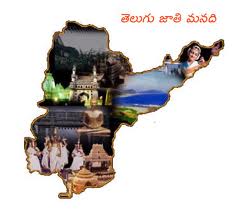
Formation of Andhra Pradesh


Formation of Andhra Pradesh – 1947 to 1956

Hyderabad state (outlined in red color) superimposed on today's India map.There are a lot of myths and huge ignorance surrounding the formation of Andhra Pradesh. People generally assume that it was historically one through time. However, Andhra Pradesh witnessed many changes before it emerged as the first linguistic state on November 1, 1956. The years 1947 to 1956 were very crucial in the history of Andhra Pradesh. When India got independence on August 15, 1947, the three main regions of Andhra Pradesh – Coastal Andhra, Rayalaseema and Telangana were not part of Andhra Pradesh state.

Coastal Andhra and Rayalaseema belonged to Madras Presidency as a province of British India. Telangana was part of Hyderabad state, which was an independent native Indian state. Though, there were 568 native Indian states, Hyderabad State was the most important native state and was administered directly by the Governor General of India.

Madras Presidency (in green color) - 1909. The area in darker shade of green represents Coastal Andhra and Rayalaseema regions
The ruler of Hyderabad State was considered the most senior or superior native Indian ruler. Hyderabad state included Telangana, 4 Kannada districts in Gulberga division & 4 Marathi districts in Aurangabad division.

There was a big difference between these two regions. Unlike Madras Presidency, Hyderabad state was not under direct British rule. The law of Madras Presidency rested upon the laws passed by the British Parliament. In contrast, Hyderabad state had its own law. English was the official language of Madras Presidency, where as it was Urdu for Hyderabad state. Which means all records were kept only in Urdu (for this reason the old land records are in Urdu). The maintenance of all records in Urdu is symbolic of the differences between the two vastly different administrative systems. Urdu was a compulsory subject in Hyderabad state and almost all educated people knew Urdu like people know English today.

Hyderabad state had its own financial, military, judicial, police, general, public works and revenue departments. The administration of Rayalseema and Coastal Andhra mostly followed the current system in India that was derived from British administration systems. Whereas Hyderabad State followed the Moghul administration systems (with changes made over time).


The Formation of Andhra Pradesh 
However, Telugu speaking people demanded for their long cherished Visalandhra formation, but people of Hyderabad state were unanimous in their demand for splitting the state into three parts. The States Reorganization Commission headed by Syed Fazal Ali heard the views of different people and organizations. Based on the Commission’s conclusions, the Congress Party High Command preferred Visalandhra and enlarged the state by including nine Telugu speaking districts of Hyderabad state to eleven districts of Andhra state to form Andhra Pradesh with 20 districts. In the process, the Hyderabad state was split among Maharashtra, Karnataka and Andhra State. Aurangabad division merged with Maharashtra and Gulbarga division merged with Karnataka. The rest of the two divisions of the state – Gulshanabad or Medak and Nizamabad merged with Andhra State.
Thus, the state of ‘Andhra Pradesh’ emerged merging all the districts of Coastal Andhra, Rayalaseema and Telangana on November 1, 1956, with Neelam Sanjiva Reddy as the Chief Minister and C.M Trivedi as the Governor.


Maha Shivratri

Maha Shivratri

Maha Shivratri is a Hindu festival celebrated every year in reverence of Lord Shiva. Alternate common names/spellings include Maha Sivaratri, Shivaratri, Sivarathri, and Shivaratri. Shivaratri literally means the great night of Shiva or the night of Shiva. It is celebrated every year on the 13th night/14th day of the Maagha or Phalguna month of the Hindu calendar. Since many different calendars are followed by various ethno-linguistic groups of India, the month and the Tithi name are not uniform all over India. Celebrated in the dark fortnight or Krishna Paksha(waning moon) of the month of Maagha according to the Shalivahana or Gujarati Vikrama or Phalguna according to the Vikrama era. 
The festival is principally celebrated by offerings of Bael or Bilva/Vilvam leaves to Lord Shiva, all day fasting and an all night long vigil. In accordance with scriptural and discipleship traditions, penances are performed in order to gain boons in the practice of Yoga and meditation, in order to reach life's summum bonum steadily and swiftly. A week long International Mandi Shivratri Fair held at Mandi in the Indian state of Himachal Pradesh every year is one of the major tourist attractions in the state.

Legends
According to a legend,Parvati performed tapas, prayed and meditated on this day to ward off any evil that might befall her husband on the moonless night. Since then, Mahashivaratri is believed to be an auspicious occasion for women to pray for the well-being of their husbands and sons. An unmarried woman prays for a husband like Shiva, who is considered to be the ideal husband. Another legend of the day is that Shiva and Shakti married each other.
There is one more legend associated with Samudra Manthan (churning of ocean), a process in which the asuras (demons) and the gods joined hands to churn out amrut(nectar) from the depths of the ocean, using a mountain and a snake as a rope. Among many things that came out, a pot of poison came out of the ocean.this poison was so potent that it has the power to destroy the whole universe.all the devathas (gods)and asuras ran in different directions to save themselves.no one could dare to stop the spreading poison and on the request of gods, Lord Shiva drank the poison. Shocked by His act, Goddess Parvathi just tightened her noose with her hands over the neck of the Lord and hence managed to stop it in His neck. The poison was so potent that it changed the color of His neck to blue. For this reason, Lord Shiva is also called Neelkanta.

Pralaya (the Deluge)

Another version relates that the whole world was facing destruction and Goddess Parvati worshipped her husband Shiva to save it. She prayed for the jivs (living souls) remaining in se –- like particles of gold dust in a lump of wax -- during the long period of pralaya (deluge) night, that they should, upon becoming active again, have His blessings, but only if they worshipped Him just as she did. Her prayer was granted. Parvati named the night for the worship of Ishwar by mortals Maha-Sivaratri, or the great night of Shiva, since Pralaya is brought about by Him.om shiv 

The Lord Shiva's Favourite Day
After creation was complete, Parvati asked Lord Shiva which devotees and rituals pleased him the most. The Lord replied that the 13th night of the new moon, during the month of Maagha, is his most favourite day. Parvati repeated these words to her friends, from whom the word spread over all creation.

Christmas


Christmas
              
                   
Christmas or Christmas Day is an annual commemoration of the birth of Jesus Christ, celebrated generally on December 25 as a religious and cultural holiday by billions of people around the world. A feast central to the Christian liturgical year, it closes the Advent season and initiates the twelve days of Christmastide. Christmas is a civil holiday in many of the world's nations, is celebrated by an increasing number of non-Christians, and is an integral part of the Christmas and holiday season.

The precise year of Jesus' birth, which some historians place between 7 and 2 BC, is unknown. By the early-to-mid 4th century, Western Christianity had placed Christmas on December 25, a date later adopted in the East. The date of Christmas may have initially been chosen to correspond with the day exactly nine months after the Annunciation, the date Christians believe Jesus to have been conceived, as well as the date of the Roman winter solstice, which Christians consider to be the "Sun of righteousness" prophesied in Malachi 4:2.

The original date of the celebration in Eastern Christianity was January 6, in connection with Epiphany, and that is still the date of the celebration for the Armenian Apostolic Church and in Armenia, where it is a public holiday. As of 2012, there is a difference of 13 days between the modern Gregorian calendar and the older Julian calendar. Those who continue to use the Julian calendar or its equivalents thus celebrate December 25 and January 6 on what for the majority of the world is January 7 and January 19. For this reason, Ethiopia, Russia, Ukraine, Serbia, the Republic of Macedonia, and the Republic of Moldova celebrate Christmas on what in the Gregorian calendar is January 7; all the Greek Orthodox Churches celebrate Christmas on December 25.

The popular celebratory customs associated in various countries with Christmas have a mix of pre-Christian, Christian and secular themes and origins. Popular modern customs of the holiday include gift giving, Christmas music and caroling, an exchange of Christmas cards, church celebrations, a special meal, and the display of various Christmas decorations, including Christmas trees, Christmas lights, nativity scenes, garlands, wreaths, mistletoe, and holly. In addition, several closely related and often interchangeable figures, known as Santa Claus, Father Christmas, Saint Nicholas and Christkind, are associated with bringing gifts to children during the Christmas season and have their own body of traditions and lore. Because gift-giving and many other aspects of the Christmas festival involve heightened economic activity among both Christians and non-Christians, the holiday has become a significant event and a key sales period for retailers and businesses. The economic impact of Christmas is a factor that has grown steadily over the past few centuries in many regions of the world.

Celebration

Christmas Day is celebrated as a major festival and public holiday in countries around the world, including many whose populations are mostly non-Christian. In some non-Christian countries, periods of former colonial rule introduced the celebration (e.g. Hong Kong); in others, Christian minorities or foreign cultural influences have led populations to observe the holiday. Countries such as Japan and Korea, where Christmas is popular despite there being only a small number of Christians, have adopted many of the secular aspects of Christmas, such as gift-giving, decorations and Christmas trees.

Notable countries in which Christmas is not a formal public holiday include China, (excepting Hong Kong and Macao), Japan, Saudi Arabia, Algeria, Thailand, Nepal, Iran, Turkey and North Korea. Christmas celebrations around the world can vary markedly in form, reflecting differing cultural and national traditions.

Among countries with a strong Christian tradition, a variety of Christmas celebrations have developed that incorporate regional and local cultures. For Christians, participating in a religious service plays an important part in the recognition of the season. Christmas, along with Easter, is the period of highest annual church attendance. 

In Catholic countries, the people hold religious processions or parades in the days preceding Christmas. In other countries, secular processions or parades featuring Santa Claus and other seasonal figures are often held. Family reunions and the exchange of gifts are a widespread feature of the season. Gift giving takes place on Christmas Day in most countries. Others practice gift giving on December 6, Saint Nicholas Day, and January 6, Epiphany.

Nagula Chavithi


Nagula Chavithi

Nagula Chavithi (Telugu: నాగుల చవితి) is an auspicious day to observe Naga Puja. Nagula Chavithi is observed on the fourth day 
(Chaturthi) after Deepavali Amavasya during Karthika masam. Nag Panchami and Nagasashti are observed after Naga Chaturthi. In some parts of Andhra Pradesh it is also celebrated in the month of Sravana masam.
Nagula Chavithi, a festival to worship Nag Devatas (Serpent Gods), is mainly a women festival. Nagula Chavithi is observed by married women for their wellbeing of their children. During the Chavithi festival, women keep fast and observe Naga Puja. Devotees offer milk and dry fruits to Sarpa Devata at the Valmeekam or Putta (snake pits). On Nag Chaturthi day, Ashtanag (seven hooded cobra) is worshipped.
Nagula Chavithi in Kartika masam is a major festival in Andhra Pradesh and some parts of Karnataka. The rituals and puja procedures are different from place to place. Some people place Naga devatha idol at home and perform puja. But in some places, devotees go to 'Putta' (Snake pit) and offer naivedyam and perform other pujas there.
The popular legend associated with Nagula Chavithi in Telugu Hindu culture suggests that on the day Lord Shiva drank the poison Halahala or Kalkuta to save the universe during the famous incident of Samudra Manthan.
Pujas and prayers are held in Naga temples across the state. Stop the Practice of Feeding of Snakes during Festivals.
Nowadays, Nagula Chavithi day is noted for the notorious practice of offering milk and eggs to the snakes, especially cobras near snake pits. Snake charmers also bring cobras to villages and towns which are fed with milk by devotees. Such practices should not be encouraged as it leads to the death of snakes.
Snakes don’t drink milk but the practice has been encouraged by popular beliefs.Worship of Nagas is a constant reminder to humans to live in harmony with Nature. And the ideal way to worship Nagas is by protecting the forests and grooves that are home of snakes and other animals.

Maha Shivratri


The Story Of King Chitrabhanu
Once upon a time King Chitrabhanu of the Ikshvaku dynasty, who ruled over the whole of Jambudvipa (India), was observing a fast with his wife, it being the day of Maha Shivaratri. The sage Ashtavakra came on a visit to the court of the king.
The sage asked the king the purpose of his observing the fast. King Chitrabhanu explained that he had a gift of remembering the incidents of his past birth, and in his previous life he had been a hunter in Varanasi and his name was Suswara. His only livelihood was to kill and sell birds and animals. The day before the new moon, while roaming through forests in search of animals, he saw a deer, but before his arrow flew he noticed the deer's family and their sadness at its impending death. So he let it live. He had still not caught anything when he was overtaken by nightfall and climbed a tree for shelter. It happened to be a Bael tree. His canteen leaked water, so he was both hungry and thirsty. These two torments kept him awake throughout the night, thinking of his poor wife and children who were starving and anxiously waiting for his return. To pass away the time he engaged himself in plucking the Bael leaves and dropping them down onto the ground.
The next day he returned home and bought some food for himself and his family. The moment he was about to break his fast a stranger came to him, begging for food. He served the food first to stranger and then had his own.
At the time of his death, he saw two messengers of Lord Shiva, sent to conduct his soul to the abode of Lord Shiva. He learnt then for the first time of the great merit he had earned by unconscious worship of Lord Shiva during the night of Shivaratri. The messengers told him that there had been a Lingam (a symbol for the worship of Shiva) at the bottom of the tree. The leaves he dropped had fallen on the Lingam, in imitation of its ritual worship. The water from his leaky canteen had washed the Lingam (also a ritual action), and he had fasted all day and all night. Thus, he unconsciously had worshipped the Lord. As the conclusion of the tale the King said that he had lived in the abode of the Lord and enjoyed divine bliss for a long time before being reborn as Chitrabhanu. This story is narrated in the Garuda Purana.
‘Sivaratri’ means ‘night of Lord Siva’. The important features of this religious function are rigid fasting for twentyfour hours and sleepless vigil during the night. Every true devotee of Lord Siva spends the night of Sivaratri in deep meditation, keeps vigil and observes fast.
The worship of Lord Siva consists in offering flowers, Bilva leaves and other gifts on the Linga which is a symbol of Lord Siva, and bathing it with milk, honey, butter, ghee, rose-water, etc.
When creation had been completed, Siva and Parvati had been living on the top of Kailas. Parvati asked: “O venerable Lord, which of the many rituals observed in Thy honour doth please Thee most?” Lord Siva replied: “The thirteenth night of the new moon, Krishna Paksha, in the month of Phalguna (February-March) is known as Sivaratri, My most favourable Tithi. My devotee gives Me greater happiness by mere fasting than by ceremonial baths, and offerings of flowers, sweets, incense, etc.
“The devotee observes strict spiritual discipline in the day and worships Me in four different forms in the four successive Praharas, each made up of three hours of the night. The offering of a few Bilva leaves is more precious to Me than the precious jewels and flowers. He should bathe Me in milk at the first Prahara, in curd at the second, in clarified butter at the third, and in honey at the fourth and last. Next morning, he should feed the Brahmins first and break the fast after the performance of the prescribed ceremonies. There is no ritual, O Parvati, which can compare with this simple routine in sanctity.
Just hear, My Beloved, of an episode which will give you an idea of the glory and power of this ritual, said Lord Shiva to Parvati.
“Once upon a time, there lived in the town of Varanasi a hunter. He was returning from the forest one evening with the game birds he had killed. He felt tired and sat at the foot of a tree to take some rest. He was overpowered by sleep. When he woke up, it was all thick darkness of night. It was the night of Sivaratri but he did not know it, He climbed up the tree, tied his bundle of dead birds to a branch and sat up waiting for the dawn. The tree happened to be My favourite, the Bilva.
“There was a Linga under that tree. He plucked a few leaves dropped them down. The night-dew trickled down from his body. I was highly pleased with involuntary little gifts of the hunter. The day dawned and the hunter returned to his house.
“In course of time, the hunter fell ill and gave up his last breath. The messengers of Yama(Hinduism) arrived at his bedside to carry his soul to Yama(Hinduism). My messengers also went to the spot to take him to My abode. There was a severe fight between Yama’s messengers and My messengers. The former were totally defeated. They reported the matter to their Lord. He presented himself in person at the portals of My abode. Nandi gave him an idea of the sanctity of Sivaratri and the love which I had for the hunter. Yama surrendered the hunter to Me and returned to his abode quickly.
“The hunter was able to enter My abode and ward off death by simple fasting and offering of a few Bilva leaves, however involuntary it might be because it was the night of Sivaratri. Such is the solemnity and sacredness associated with the night”.
Parvati was deeply impressed by the speech of Lord Siva on the sanctity and glory of the ritual. She repeated it to Her friends who in their turn passed it on to the ruling princes on earth. Thus was the sanctity of Sivaratri broadcast all over the world. 

Rituals of Maha Shivratri
From the very early morning, Shiva temples are flocked by devotees, too young and old, who come to perform the traditional Shivalinga worship (puja) and hence hope for favours from the god. Devotees bathe at sunrise, preferably in the Ganga, or any other holy water source (like the Shiva Sagartank at Khajurao). This is a purificatory rite, an important part of all Hindu festivals. Wearing a clean piece of clothing after the holy bath, worshippers carry pots of water to the temple to bathe the Shivalinga. They offer prayers to the sun, Vishnu and Shiva.Women pray for the well-being of their husbands and sons. An unmarried woman prays for a husband like Shiva, who is considered to be the ideal husband. The temple reverberates with the sound of bells and shouts of “Shankerji ki Jai” meaning 'Hail Shiva'. Devotees circumambulate the linga, three or seven times, and then pour water over it. Some also pour milk.
According to the Shiva Purana, the Mahashivaratri worship must incorporate six items:
Bathing the Shiv Linga with water, milk and honey, and Wood apple or bel leaves added to it, representing purification of the soul;
The vermilion paste applied on the Shiv Linga after bathing it, representing virtue;
Offering of fruits, which is conducive to longevity and gratification of desires;
Burning incense, yielding wealth;
The lighting of the lamp which is conducive to the attainment of knowledge;
And betel leaves marking satisfaction with worldly pleasures.
Tripundra refers to the three horizontal stripes of holy ash applied to the forehead by worshippers of Lord Shiva. These stripes symbolise spiritual knowledge, purity and penance (spiritual practice of Yoga), so also they represent the three eyes of Lord Shiva.
Wearing a rosary made from the rudraksha seed of the rudraksha tree (said to have sprung from the tears of Lord Shiva) when worshipping Lord Shiva is ideal. A rudraksha seed is a mahogany-like color, sometimes black, and sometimes may have traces of sacred sandalwood powder, turmeric, kumkum, or holy ash if the rosary was used in worship ceremonies or anointed.


Other Traditional Worship of Lord Shiva
The twelve Jyotirlingas (lingams of light) are sacred shrines of Lord Shiva, and centres for his worship. They are known as Swayambhus, meaning the lingams sprung up by themselves at these places and temples were built there afterwards.
Temples are listed in the India tourist guides.

Mahashivaratri in Southern India
Maha Shivaratri is celebrated widely in the temples all over Andhra Pradesh, Karnataka, Kerala and Tamil Nadu. Shiva is considered the Adi (first) Guru from whom the yogic tradition originates. According to tradition, the planetary positions on this night are such that there is a powerful natural upsurge of energy in the human system. It is said to be beneficial for one's physical and spiritual well-being to stay awake and aware throughout the night.On this day, artists from various fields such as music and dance perform the whole nigSahasrakalasabishekam
This is a very special and rare puja conducted during 10 days of Maha Sivarathri festival. It is well known that Lord Siva is abhishekapriya (lover of ablutions). Lord Parasurama and Kroshta Muni, during their worship of the Lord here, are believed to have bathed the deity with Sahasrakalasam or a thousand pots of holy water according to Vedic rites. Now during Mahasivarathri festival days the Head Priest (Thanthri) and his team perform this puja. It is a ten day function, each day an offering of 101 Kalasam or pots of holy water (100 being made of silver, while one is made of gold), surcharged with mantras recited by learned Brahmins seated on the Mukhamantapam. These are emptied on the deity, the golden pot Brahmakalasam being the last one. A magnificent light is the indication or identity of Lord Shiva and the Shiva Lingam is considered to be the symbol of it. Hence, the formal worship on Maha Shivaratri consists of bathing the Shiva Lingam. Lord Shiva is said to be burning with the fire of austerity and so only those items are offered to Him that have a cooling effect. A cool water bath is believed to propitiate Him best. There is a belief among devotees that participation in Sahasrakalasam and offering holy worship materials, will lead to blessings with prosperity and peaceful life. Hundreds of devotees thronging the shrine with chants of “Namah Shivaya”, “Hara hara Mahadeva”, and “Sambho Mahadeva”...

Sivarathri Nrutham
Sivarathri Nrutham at Thrikkuratti temple, according to religious scholars, resembles the cosmic dance of Shiva, called ‘Anandatandava,' meaning, ‘the Dance of Bliss’ symbolizing the cosmic cycles of creation and destruction, as well as the daily rhythm of birth and death. The dance is a pictorial allegory of the five principle manifestations of eternal energy - creation, destruction, preservation, salvation, and illusion.
The Priest keeps sheeveli vigraha (idol) fixed on decorated frame on his head. He makes seven rounds on Pradakshina Vazhi (holy walkway made of granite around Sanctum Santorum). When the fifth round is reached at the west nada (Parvathi nada), the door opens for just 10 minutes. This is an annual ceremony. Thousands of Pilgrims rush to have a glance of this auspicious moment. At this time all the pradakshina vazhi will be lit with camphor and brass temple lamps by thousands of devotes who stay awake through the night while chanting “Nama Sivaya”, “Hara Hara Mahadeva” and “Sambho Mahadeva”. Older devotees sing “Hara sankara siva sankara duritham kala sivane”. In this enlightened serene mood, the Priest performs Nrutham and runs the pradakshina vazhi towards the east nada. During the next two rounds he accepts “Valiya kanikka”. The Sivarathri Nrutham is followed by the well known magnificent display of fireworks.

Mahasivarathri Procession
On Sivarathri day evening a grand procession starts from Kadapra Kainikkara Temple. It includes, several decorated floats, Kaavadi Aaatam, Mayilattom, Amman Kudom, Thaiyyam, Vela Kali, Kuthiyotta Chuvadu, richly caparisoned elephants and folk art forms etc. attracts thousands of devotees and tourists. When the main procession reaches Market Junction, other mini processions from Kurattikkadu Mutharamman Temple, Kurattissery Kannamkavil Mutharamman Temple, Thrippavoor Mahavishnu Temple, Vishavarsherikkara Subrahmanya Swami temple, Sreekaryam Maliekal Rajan temple, and Alumoodu Sivaparvathy Temple joins and makes the procession quite livening. The marvellous as well as magical effect of the Sinakari melam and Panchavadyam, a combination of five percussion and wind instruments is to be felt and enjoyed. Among the varieties of festivals celebrated in Kerala, Thrikkuratti Sivarathri Procession is one of the most thunderous, spectacular and dazzling. It is an expression of popular fascination for sound and colour, and because of the pageantry, it appeals to all people including foreigners. Once the procession reaches the temple, Deeparadhana is followed by colourful display of fireworks.

Panchaakshari
Shiva, as the god of destroying evil, is the third among the divine trinity of Hindu mythology. The holy mantra consisting of five-syllables: "Na" "Ma" "Shi" "Vaa" "Ya" (Om NamaH Shivaaya) in praise of Lord Shiva is chanted incessantly on special occasions like Shivaratri. His thousands of names, each of which describe His greatness, may also be chanted. Shiva means "auspicious". As Shankara, He is the giver of happiness to all. Nataraja (the king of dancers) is a favourite form adored by dancers and musicians.

'Rudrabhisheka''
There is a special mantra in the Vedas (the most ancient scripture in the history of human race and which forms the fountain-head of the Hindu culture) - Rudra Sukta - which is recited by pundits while they offer a holy bath to Lord Shiva by way of washing a Shiva-linga or a Shaligrama which are the symbols of god with the waters of sacred rivers like the Ganges. This ritual is known as "Rudrabhisheka". A Shaligrama constitutes a sacred pebble that often conceals ammonite fossils within. Such precious stones are brought from the river Gandaki at the frozen summits of the Himalayas.
Washing the Shaligrama as a part of Shiva-puja symbolises the removal of impurities from our mind. It also means washing off false ego. Unless we attain self-realization, we all become the victims of a false-self or an ego. False-self is due to an illusion (or ignorance), a covering upon our real soul, of our mind, which then acts from mistaken identity. According to Vedanta (philosophical doctrines), this accumulation of false-self upon our real Self is the root cause of our bondage and sufferings in life. This notion of purification (of Shaligram stone by holy waters) also symbolises at the philosophical level, the eradication of the accumulated material interests (of us) which often blur the inherent spiritual core or Reality.

Mysticism
According to the mystic mythology of the Puraanaas, the Kailasa peak of the Himalayas is the abode of Shiva and He bears the Ganges on His head. As the Lord of creatures, He is metaphorically called as Pashupathi (with Nandi, the bull, His favourite animal) and His fearless nature is euphemised as Sarpabhushana. Shiva's posture in the meditation is ascribed to Him as the head of Yogis (Yogiraja) who practises various spiritual feats to attain salvation. Lord Shiva's divine consort, Goddess Parvati (who is also the daughter of Himalaya), is the deity of strength. Numerous stories in mythology describe the births of their two sons - Lord Ganesha and Lord Kartikeya (or Guha or Shanmukha or Skanda or Murugha) and their various significances.

Mrtyunjaya Mahaa Mantra
The Mrtyunjaya-maha-mantra, which is found in the Mahānārāyaṇopaniṣat and chanted as part of ŚrīRudram, is said to eradicate diseases, pain, sufferings and death:
Om Tryambakam Yajaamahe SugandhiM Pushti-vardhanam Urvaarukamiva Bandhanaan- Mrityor-muksheeyamaamRtaat - Om (for chanting Purpose only)
Om. We worship the Three-eyed One [Lord Shiva], the One of sublime fragrance who is the source of all vitality, growth and splendour. Just as a ripe cucumber is plucked from its vine, May we be freed from death not from Immortality.
A procedure, Trayambak Homa, is associated with this. It consists of an offering of drops of cow ghee on a fire, in a havan kund (sacrificial fire-pot), that uses ghee soaked cow dung as fuel. During this procedure, a prayer is said, a swaha:
Swaha Om Tryambakam Yajaamahe SugandhiM Pushti-vardhanam Urvaarukamiva Bandhanaan- Mrityor-muksheeyamaamRtaat - swaha
Om Tryambakam Yajaamahe SugandhiM sadhana-vardhanam Urvaarukamiva Yonani- Mrityor-muksheeyamaamRtaat - swaha
Om. We worship the Three-eyed One (Lord Shiva), the One of sublime fragrance who is the source of all vitality, growth and splendor. Just as your ripe cucumber grows in its vine, May we receive the shower of vitality and be liberated from death not from immortality.